

2/19/2024
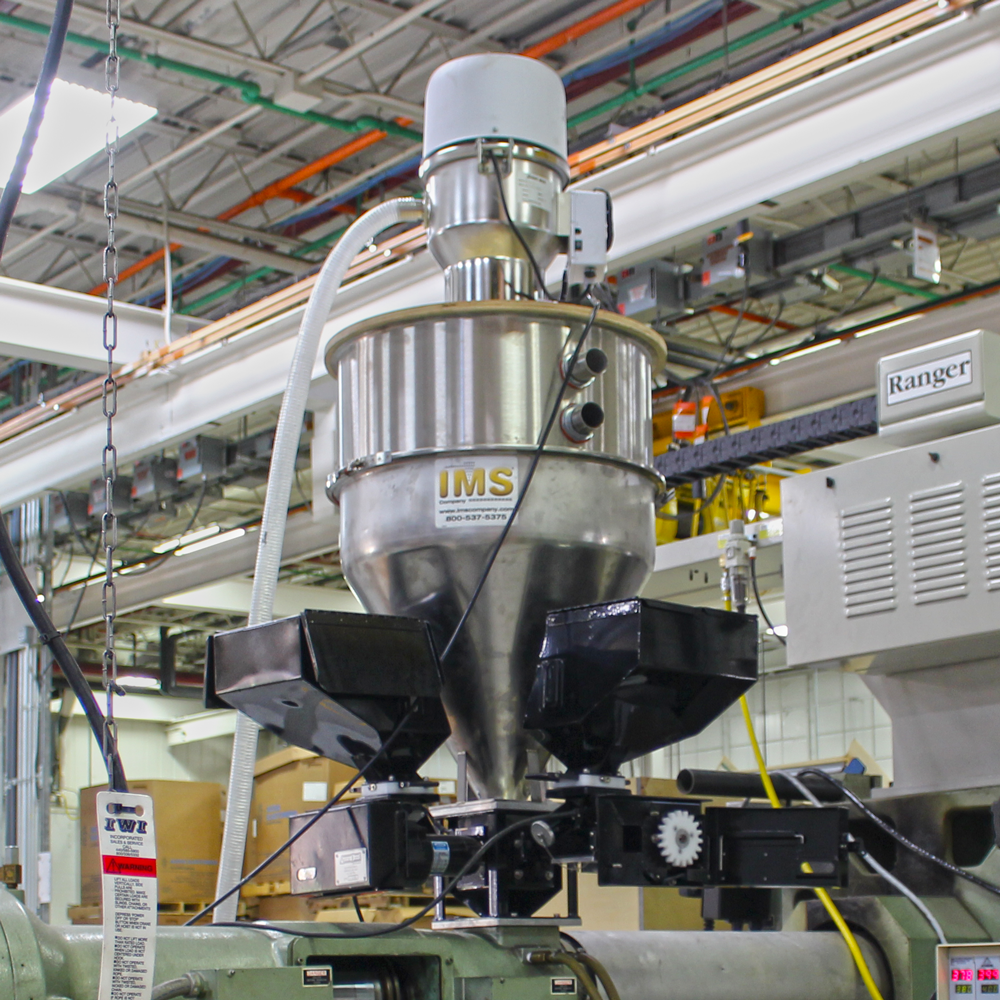
Vacuum or Hopper Loaders automate the feeding of raw material, such as plastic pellets or resin, from a storage container to the injection molding machine’s hopper. This process ensures a continuous supply of material without the need for manual intervention. This automation not only improves efficiency but also minimizes the risk of errors and inconsistencies in material feeding.
Vacuum loaders transport various types of materials over long distances. They are often equipped with filters or screens to prevent contaminants such as dust, debris, or foreign particles from entering the molding machine. This helps maintain the quality and integrity of the final molded products. Newer model vacuum loaders may come with advanced control systems that allow operators to monitor and adjust feeding parameters such as flow rate, material type, and hopper level. This level of control enables fine-tuning of the injection molding process for optimal results.
Another benefit is minimizing material waste by accurately measuring and delivering the required amount of material to the machine. This can lead to cost savings for by reducing material losses and improving overall efficiency.
Overall, vacuum loaders play a critical role in optimizing the injection molding process by automating material handling, improving efficiency, and ensuring consistent quality in the final products. Their integration into injection molding systems has become standard practice in modern manufacturing facilities. There are several types of vacuum loaders commonly used in injection molding:
- Self-contained: Have a built-in vacuum pump and are designed to be mounted directly onto the molding machine’s hopper. They are compact and easy to install, making them suitable for smaller injection molding setups.
- Central Vacuum Systems: Often used in larger facilities. Consist of a centralized vacuum pump and a network of pipes that deliver resin pellets from multiple storage bins to various molding machines throughout the facility. Central systems offer greater flexibility and efficiency in material handling.
- Venturi Loaders: Utilize compressed air to create a vacuum for conveying resin pellets. They are compact and easy to install, making them suitable for smaller molding operations. However, they may not be as efficient as other types of vacuum loaders and are typically used in lower-volume applications.
- Positive Displacement Loaders: Positive displacement loaders use a rotary valve or similar mechanism to move resin pellets from the storage hopper to the molding machine’s hopper. They are particularly useful for handling abrasive or fragile materials and are often preferred in high-volume injection molding operations due to their reliability and efficiency.
- Powder Loaders: While primarily used for conveying powders in processes like powder coating or pharmaceutical manufacturing, powder loaders can sometimes be adapted for use with injection molding processes, particularly when dealing with specialty materials or additives in powder form.
- Gravitational Vacuum Loaders: Rely on the force of gravity to move resin pellets from a higher elevation (storage hopper) to a lower elevation (molding machine hopper). They are simple in design and suitable for applications where a small amount of material needs to be conveyed over short distances.
Each type of vacuum loader has its advantages and is suitable for different applications depending on factors such as the volume of material to be conveyed, the distance it needs to travel, and the specific requirements of the injection molding process.




 IMS Company Blog
Leave a comment