


D-limonene, also known as citrus terpenes, is a chemical compound that can be found in the peels of citrus fruits like oranges, lemons, and limes. It has many uses, including as a solvent in cleaning agents, an aroma in furniture polish, a dietary supplement, and a flavoring in food and beverages. Every bit of the orange is used in production. After the orange is juiced the leftover peel is used to create orange extract and d-limonene.
Over the past few years producers are reducing the number of orange trees as their land becomes more valuable for other uses. The shift from orange cultivation to other land uses due to increasing land values is a significant issue in citrus-growing regions, including Brazil. Another issue, citrus greening, also known as Huanglongbing (HLB), and Yellow Dragon Disease (YDD) are both severe citrus diseases that have significantly impacted citrus production globally for almost 2 decades.

When you pair the long-term production decline with the chemical industry trying to move to greener, bio-based solutions like d-limonene your faced with a volatile situation. If you’re facing a shortage of d-limonene, here are a few strategies to consider:
- Alternative Solvents: Explore substitute d-limonene solvents for your process. For injection molding, solvents with similar properties might work, but it’s important to test first.
- Supplier Diversification: Look for alternative suppliers who have d-limonene available or who provide it in the quantity you need.
- Adjust Formulations: If possible, adjust your material formulations to reduce or eliminate the need for d-limonene.
- Inventory Management: Consider managing your inventory more carefully and planning your production schedules to make the most of what you have.
- Industry Collaboration: Reach out to industry groups to see if others are experiencing similar issues and if there are any shared solutions or resources available.
- Consult with Experts: Engage with experts or consultants who specialize in injection molding or materials science. They may provide insights or solutions tailored to your specific situation.
Mold Cleaners
Aerosol mold cleaners are commonly used in the injection molding industry to maintain and clean molds efficiently. These cleaners allow for easy application and targeted spraying to remove contaminants like dirt, grease, resin buildup, and other residues that accumulate. These cleaners are essential for maintaining the longevity and efficiency of molds in injection molding operations, ensuring consistent product quality and reducing downtime.
IMS Company Offers a Series of A Natural, Biodegradable Cleaners
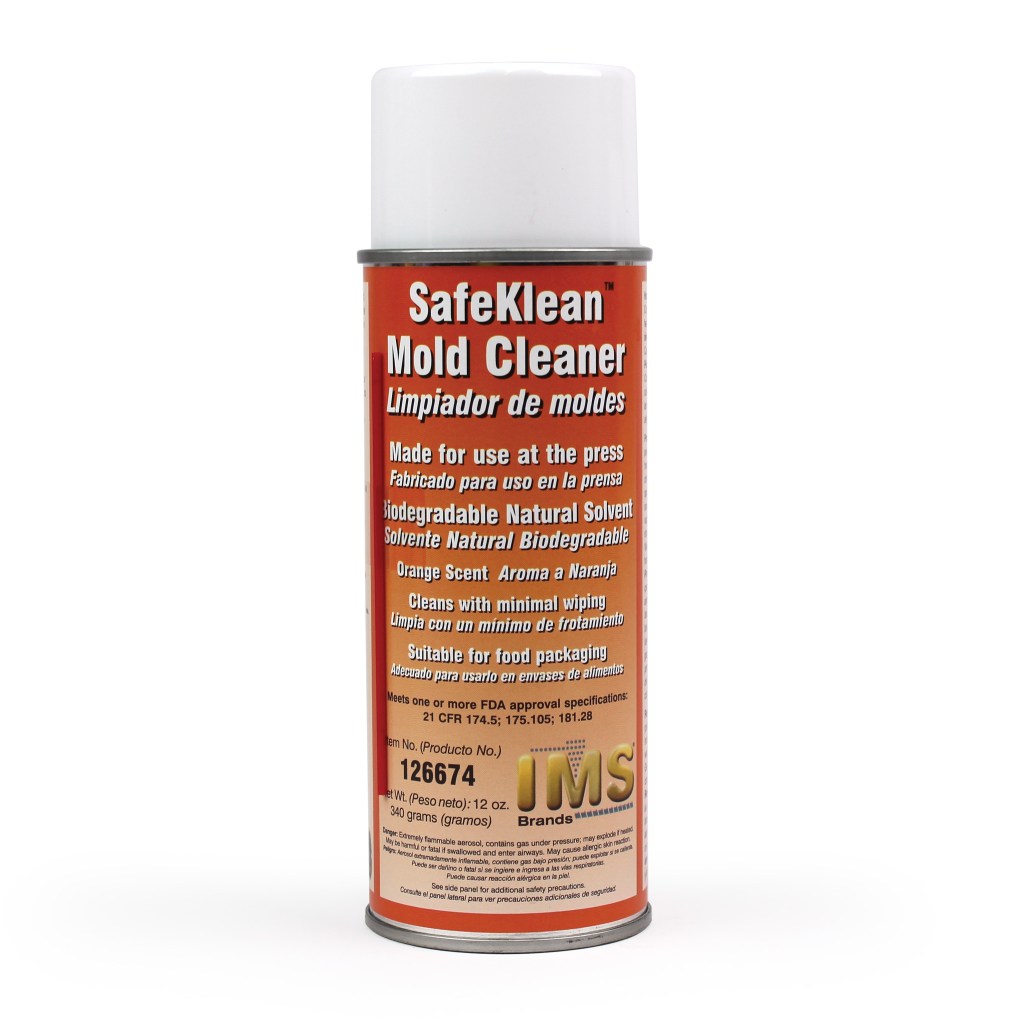
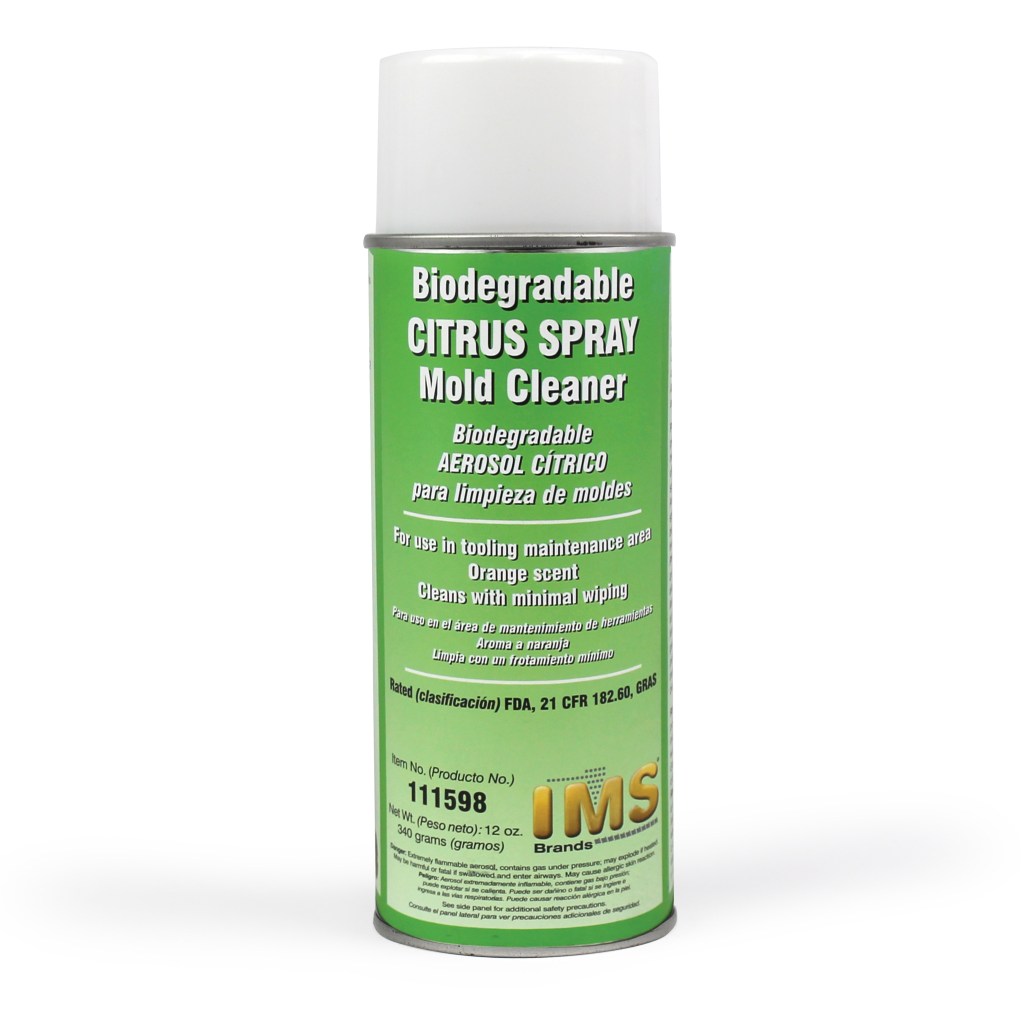

IMS SafeKlean™
Most Environmentally Friendly Mold Cleaner
FDA rated GRAS — 21 CFR 182.60
Hydro Carbon based propellant
Lowest Flammability
Lowest Toxicity
Cleans with minimal wiping, saves labor time
Citrus Spray
Pure, all-natural cleaner with good solvent ability
FDA rated GRAS — 21 CFR 182.60
Hydro Carbon based propellant
Highly Flammable
Lowest Toxicity
Cleans with minimal wiping, saves labor time
Citrus Spray
Helps avoid citrus
price fluctuations
FDA rated 21 CFR 172.884 and 178.3650
Carbon Dioxide propellant
Flammable
Low Toxicity
Cleans with minimal wiping, saves labor time





 IMS Company Blog
Leave a comment